
Independent technical assessment · Sydney
Find the cause. Document the defects. Plan the right solution.
Professional mechanical ventilation inspections for persistent odours, duct leakage, weak bathroom, laundry or kitchen extraction, moisture problems and handover defects.
Mechanical ventilation diagnostics
Know What Is Failing Before You Pay for Repairs
Unpleasant odours, poor extraction, condensation and leaking ductwork usually have an underlying cause. JG Air Conditioning & Mechanical Services inspects new and existing ventilation systems across Sydney and provides a practical written condition report identifying visible defects, performance concerns and recommended corrective actions.
The service is suitable for homeowners, strata managers, builders, property managers and commercial facilities that need evidence—not guesswork—before planning rectification work.
Persistent Odours
Smells entering apartments, bathrooms, common areas or neighbouring tenancies through shared ducts, risers or ceiling spaces.
Weak Extraction
Bathroom, laundry or kitchen fans that operate but do not remove moisture, steam or odours effectively.
Duct Leakage
Disconnected, torn, crushed or poorly sealed flexible ductwork allowing air to escape into concealed spaces.
Condensation
Moisture accumulation, damaged finishes and conditions that may increase the risk of visible mould.
Reverse Airflow
Backdrafts caused by dampers, shared systems, pressure differences or inadequate make-up air.
Handover Defects
Accessible installation defects or performance concerns found before completion of a new project.
Inspect · Test · Document
Evidence-Based Ventilation Investigation
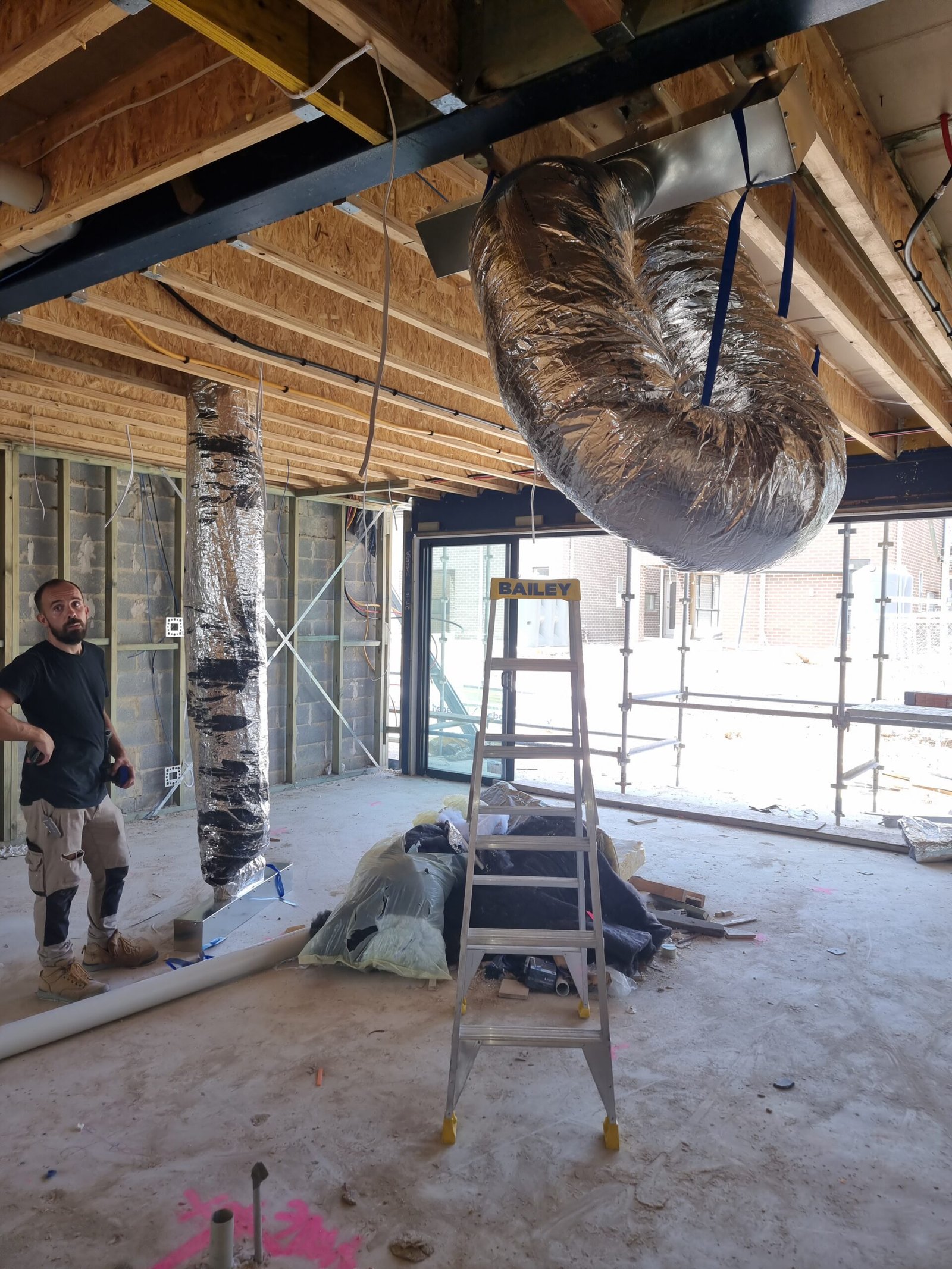
Air leakage from an open or poorly sealed connection can reduce extraction and carry moisture or odours into ceiling cavities, service risers or adjoining spaces.
We inspect safely accessible components and document relevant defects with photographs. When a fault is concealed or intermittent, the report may recommend controlled smoke testing, airflow measurements, access panels or specialist leakage testing.
Representative JG Air mechanical ventilation project photograph. Testing methods depend on access, site conditions and the agreed inspection scope.
Wet areas & kitchens
Bathroom, Laundry and Kitchen Extraction
These rooms generate moisture, odours and airborne contaminants. If exhaust air is not correctly transferred and discharged, the result may be lingering smells, condensation and damage to finishes.
- Exhaust fan operation and accessible airflow
- Grilles, duct routes and external discharge points
- Backdraft dampers and shared riser connections
- Door undercuts and other make-up air paths
- Controls, switches and run-on timers
Odour pathways
Why Smells Travel Through Buildings
The closest fan is not always the source. Odours may move through leaking ducts, shared risers, ceiling plenums, drainage openings, external air intakes or incorrect room pressures.
- Possible odour entry and transfer points
- Duct or riser leakage
- Reverse airflow and failed dampers
- Insufficient exhaust or make-up air
- Building or plumbing issues outside HVAC scope
A useful, practical deliverable
What Is Included in the Ventilation Condition Report?
The report separates observed defects from probable causes and clearly records any components that could not be accessed or conclusively tested.
- Review of the reported ventilation problem
- Visual inspection of accessible components
- Operational checks of fans and controls
- Airflow observations or agreed measurements
- Inspection of accessible grilles, dampers and ducts
- Review of available drawings or previous reports
- Photographs of relevant defects
- Likely causes and performance concerns
- Priority classification for recommended actions
- Practical repair or further-testing recommendations
Suitable throughout the building lifecycle
Reports for New and Existing Properties
New Buildings & Installations
A pre-handover inspection can identify visible defects before completion. Accessible components can be reviewed against the agreed scope, available mechanical drawings, equipment schedules and relevant installation requirements.
Findings may include incomplete connections, incorrect grille locations, damaged ducts, missing dampers, poor service access or systems that do not appear to match the supplied design information.
Existing Buildings
Ventilation systems can deteriorate, become blocked or be modified without adequate documentation. A condition report helps owners and managers identify priority defects and plan repairs, upgrades or further testing.
We inspect homes, apartment buildings, offices, shops, hospitality premises, commercial facilities and mixed-use properties across Sydney.
Better decisions
Benefits of an Inspection
- Investigate the probable cause, not only the symptom
- Reduce persistent odour and moisture problems
- Identify damaged or leaking ductwork
- Prioritise urgent and non-urgent repairs
- Avoid unnecessary equipment replacement
- Create a documented scope for rectification
Experienced HVAC assessment
Why Choose JG Air?
JG Air brings more than 25 years of hands-on experience across residential and commercial air conditioning and mechanical ventilation.
Our background includes exhaust and fresh-air systems, flexible and rigid ductwork, fans, grilles, dampers and mechanical plant. You receive practical findings prepared by an experienced HVAC technician—not a generic checklist.
Frequently asked questions
Mechanical Ventilation Report FAQs
Why is my bathroom exhaust fan running but not extracting air?
Possible causes include blocked or disconnected ductwork, a failed fan, a restricted discharge point, a closed damper or insufficient make-up air. The actual cause needs to be confirmed by inspection.
Can ventilation duct leaks cause odours?
Yes. Open, damaged or poorly sealed ducts can allow odours to enter ceiling spaces, risers or neighbouring areas. Shared exhaust systems and reverse airflow may also transfer smells.
Why do smells enter through an apartment exhaust grille?
Potential causes include reverse airflow, a defective backdraft damper, pressure differences, shared duct leakage or a problem in the common exhaust riser. The source normally cannot be confirmed from the grille alone.
Can you inspect bathrooms, laundries and kitchens?
Yes. We inspect residential and commercial exhaust systems, including safely accessible fans, grilles, ducts, dampers, controls and discharge points.
Do you inspect new installations before handover?
Yes. We can inspect accessible components and document visible defects, performance concerns and apparent discrepancies against available project information.
Is the report a building compliance certificate?
No. It is a technical condition report based on the agreed scope and accessible system components. Formal certification may require a mechanical engineer, accredited certifier or another authorised professional.
Can JG Air complete the recommended repairs?
Depending on the findings and scope, we may provide a separate quotation for ventilation repairs or modifications. Work requiring another specialist will be clearly identified.
Sydney ventilation inspections
Stop Treating the Symptoms. Find the Ventilation Problem.
Request an inspection for your home, apartment building, commercial premises or new project. Please include the property address, building type, affected rooms, when the problem occurs and any available photographs, drawings or earlier reports.
Mechanical ventilation services · Commercial HVAC · Repairs & maintenance · About JG Air · 0410 353 166